At last year’s Poverty Truth Network Commissioners Gathering (October2025), we were invited to think about hope — not as a nice phrase, but as something real that we actually live and hold onto writes Cat Plackett, Amplify Support & Engagement Worker. Hope was named as a verb, a doing word: something we practise and keep going.
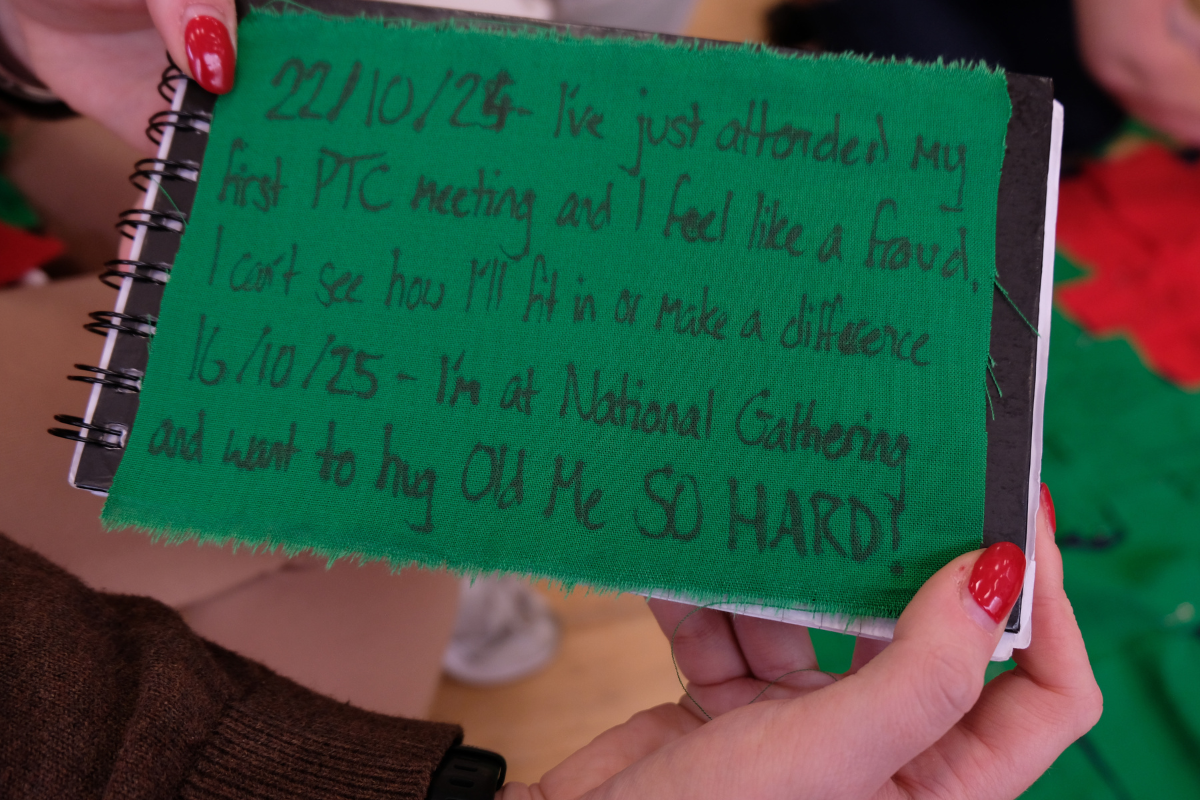
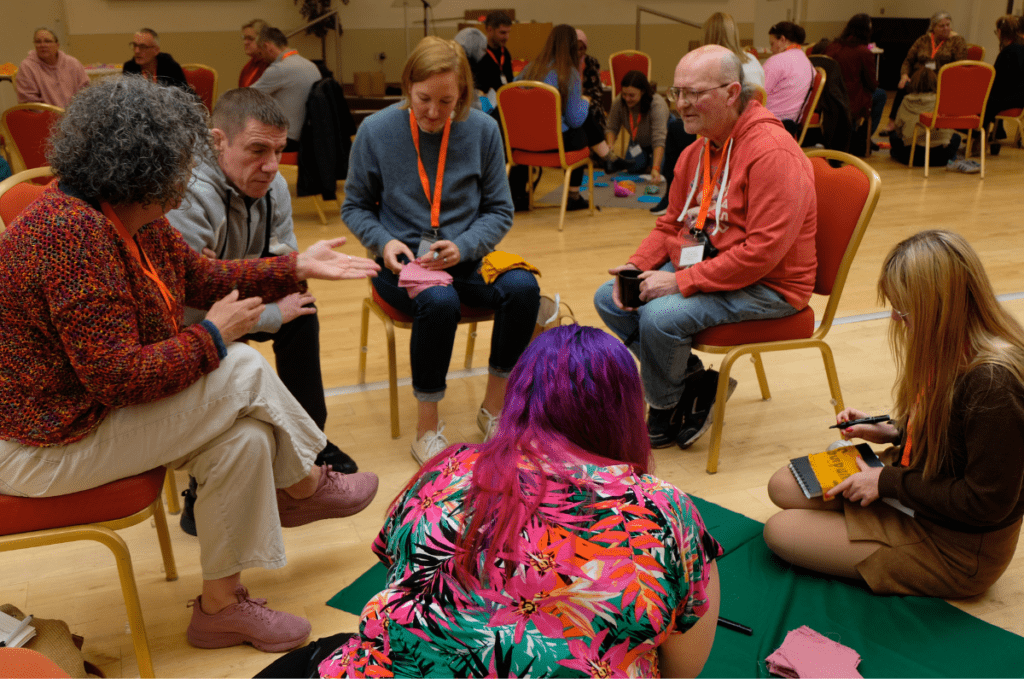
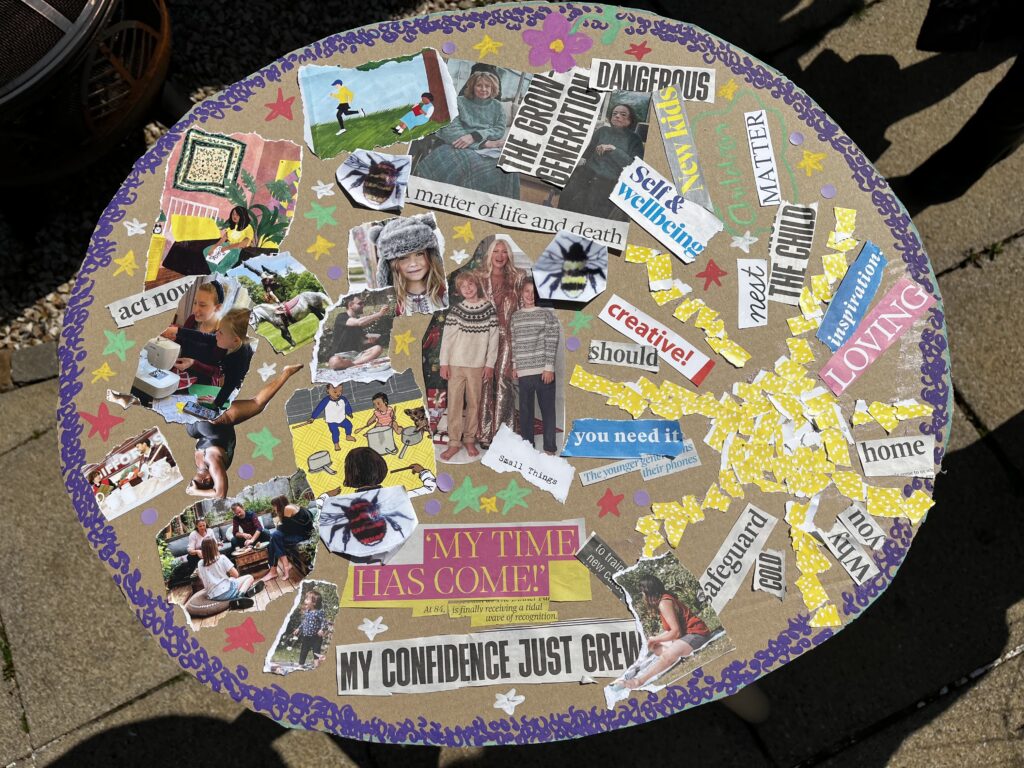
Over the past year, through the work of the Network’s Economics for All group in partnership with Carnegie UK Trust, we have been thinking about reimagining the economy using the image of a three-legged stool — the state, the community and the individual. At the Gathering, we reflected on each leg, sharing both the hope we already see around us and the hope we are still waiting for. We wrote these reflections onto cloth squares, which together formed a colourful, sometimes messy, hopeful and honest picture of where we’re at.
Community
Hope felt most alive in community — in the actual places and people that show up: warm spaces, food projects, gardens, arts and faith groups, walking groups, and Poverty Truth Commissions themselves.
We spoke about better connections, shared resources, less stigma, and being welcomed rather than judged. Many people named specific places, groups and individuals. That mattered. It reminded us that hope is often local and personal, living in relationships rather than strategies.
When we talked about the hope we are hoping for, there was a desire for stronger connections between groups, less siloed working, and for community to be recognised as an important bridge between individuals and the state.
At the same time, there was a clear message: community is strong, but it can’t and shouldn’t be expected to carry everything. The hope expressed here was for community to work alongside the state — not to replace it.
State
Hope connected to the state often came through in small but important moments — being listened to, policies actually changing, local representatives who care, and services that work when you need them.
The NHS was mentioned often, sometimes described as life-saving when it works well. Individual experiences of care and responsiveness stayed with people because they showed what’s possible when systems listen.
Looking ahead, the hopes for the state were deeply felt: systems that see people as individuals, reduce harm, protect dignity, and listen to the wisdom of those who are struggling the most. There was a strong call for fairness around benefits, housing, transport, wages and healthcare — and for accountability and empathy at scale.
This didn’t feel like opposition to the state, but a shared wish for public systems to remember why they exist and to treat people with humanity and respect.
Individuals
Hope at the individual level was often deeply personal.
We spoke about growth that comes through relationships, confidence that builds over time, and vulnerability becoming something that can be held rather than hidden. One reflection described a journey from feeling like a fraud to wanting to hug an earlier version of yourself — capturing hope as something that unfolds, rather than something you either have or don’t.
There were many references to kindness, patience, courage and persistence. Individuals weren’t described as strong in isolation, but as becoming stronger together — through connection, solidarity and shared experience.
When we talked about the hope we are hoping for, we named less shame, more honesty, real influence, and feeling safe to be vulnerable. Taken together, these hopes point towards changing conditions, not just expectations of individuals.
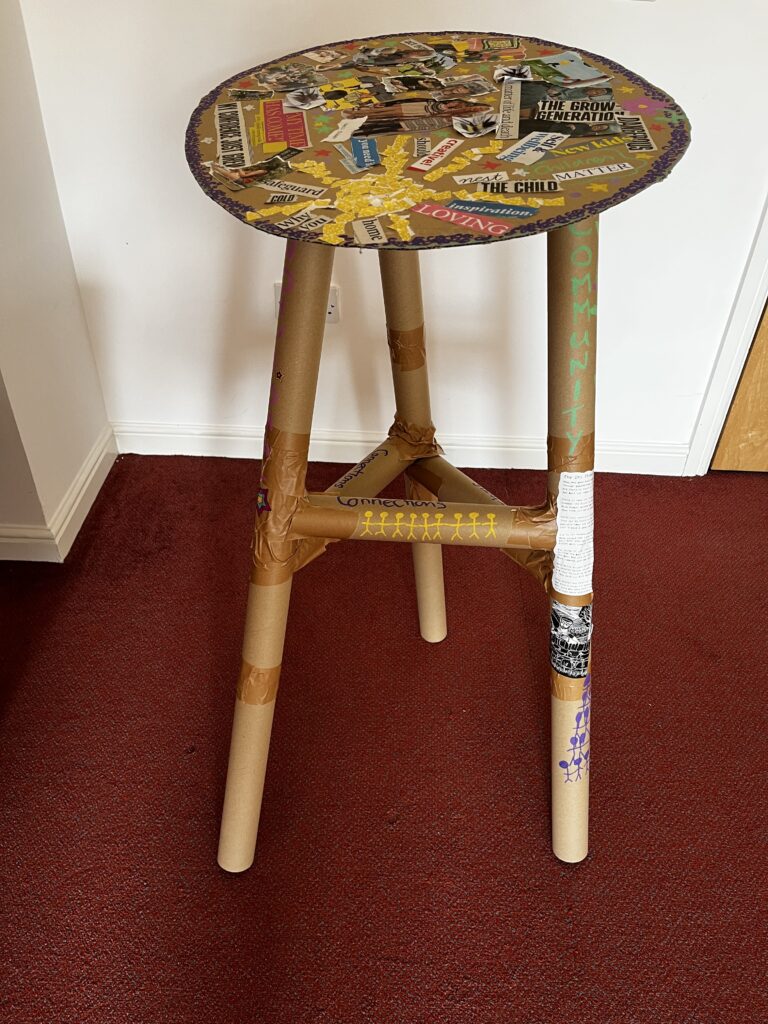
Holding the three legs together
When we look across the three-legged stool, a shared picture starts to form.
Communities are doing a huge amount of relational and emotional work. Individuals are growing into voice, confidence and connection. Trust in the state exists, but it often rests on individual moments rather than systems as a whole.
Hope seems to live most strongly where these legs meet — in relationships that humanise power, and in spaces where people can meet each other as equals. The stool doesn’t need reinventing. It needs balance, care and ongoing attention — so that hope can move from being something fragile to something we can stand on together.